
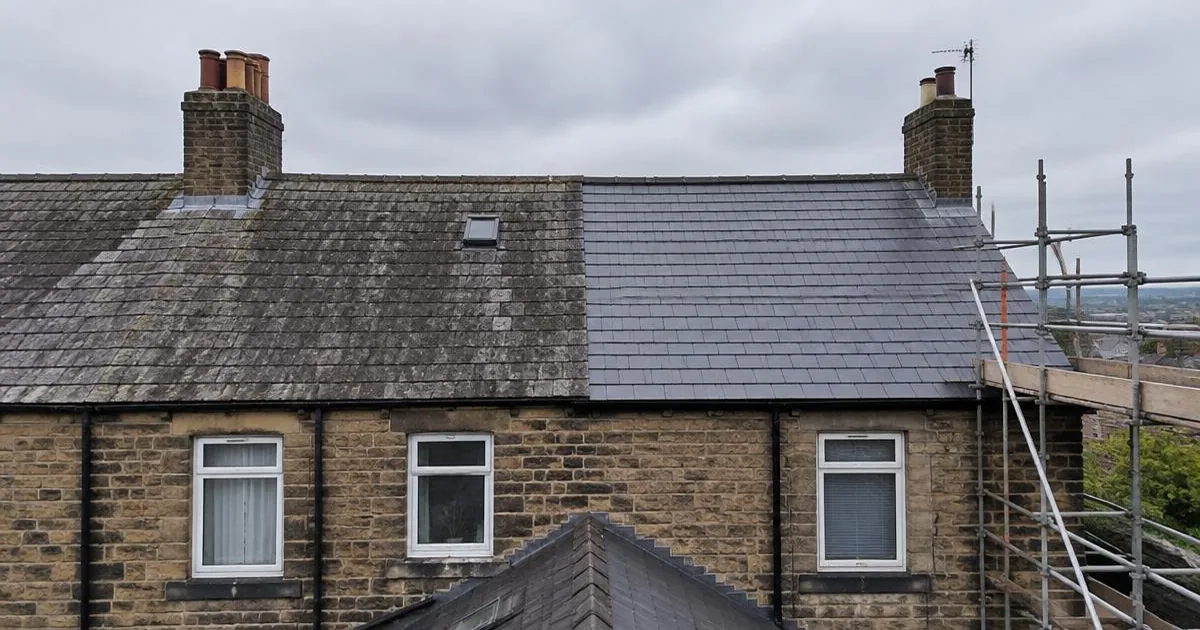
Not every roofing problem means you need a new roof. In many cases, a localised defect can be repaired effectively without replacing the entire roof.
The more important question is whether the problem is isolated or whether it is part of wider deterioration across the roof.
If you've noticed leaks, slipped tiles, recurring repairs or signs that your roof is beginning to show its age, this guide explains what to look for — and when repair or replacement may be the more sensible option.
When is a roof repair usually enough?
A repair may be appropriate when the problem is confined to a relatively small area and the rest of the roof remains in reasonable condition.
Examples may include:
- a few slipped or broken tiles
- isolated slate damage
- damaged lead flashing
- a localised leak
- a problem around a chimney
- a damaged valley
- minor storm damage
- a defect around a rooflight
- a small section of damaged guttering or roofline
In situations like these, replacing the entire roof may be unnecessary.
The key is to establish whether the visible problem is genuinely isolated or whether it is a symptom of broader deterioration.
Signs that a repair may be the right option
The damage is localised
If only one section of the roof has been affected and the surrounding roofing materials remain sound, a targeted repair may solve the problem.
This is often the case where:
- one or two tiles have slipped
- flashing has failed in a particular area
- a chimney junction has developed a leak
- storm damage has affected one part of the roof
A good repair should address the underlying cause rather than simply cover over the visible symptom.
The rest of the roof is in good condition
One of the biggest factors in deciding between repair and replacement is the overall state of the roof.
If most of the roof covering remains secure and weather-resistant, repairing a particular defect may provide a sensible long-term solution.
There is little benefit in replacing sound roofing materials simply because one component has failed.
The problem has happened only once
A single leak does not automatically indicate that a roof is failing.
Local damage can occur because of:
- severe weather
- a slipped tile
- damaged flashing
- impact
- a blocked valley
- isolated deterioration
If the problem can be clearly identified and the rest of the roof remains sound, a repair may be entirely appropriate.
When should you start thinking about replacing the roof?
Replacement becomes more likely when problems are widespread, recurring or related to the overall condition of the roofing system.
It isn't usually one individual defect that leads to replacement.
It's the pattern.
You keep needing repairs
A roof that needs repeated repairs in different areas may be approaching the point where continuing to patch individual problems becomes less economical.
For example:
- one leak is repaired
- another appears elsewhere
- additional tiles begin slipping
- flashing deteriorates
- further sections require attention
Each repair may be perfectly valid on its own.
But collectively, repeated work can indicate broader ageing or deterioration.
At that point, it is worth comparing the likely cost of ongoing repairs with the cost and longevity of a more comprehensive solution.
Large areas of tiles or slates are deteriorating
Individual tiles or slates can usually be replaced.
The situation becomes different if deterioration is affecting large sections of the roof.
Signs may include:
- widespread cracking
- repeated slipping
- multiple missing tiles
- brittle materials
- substantial weathering
- several repair areas across the same roof
The condition of the complete roof covering should then be considered rather than concentrating on each individual defect separately.
The roof has several different problems
A roof may reach a stage where there is no single problem.
Instead, you may be seeing a combination of:
- leaks
- tile damage
- deteriorating mortar
- flashing problems
- damaged ridges
- worn valleys
- sagging or movement
- recurring damp
When several components are deteriorating at the same time, replacing the roof can sometimes provide better long-term value than addressing each issue separately.
Repairs are becoming disproportionately expensive
There comes a point where repeatedly spending money on an ageing roof may no longer represent the best investment.
This is particularly relevant when repair work requires significant access, scaffolding or repeated labour.
If you are facing substantial repair costs, it is reasonable to ask:
Will this repair solve the problem for the foreseeable future, or am I likely to be spending money on the roof again soon?
A reputable roofer should be prepared to discuss both options.
Does an old roof automatically need replacing?
No.
Age alone does not determine whether a roof needs replacing.
Two roofs installed at the same time can be in very different condition depending on:
- roofing materials
- original workmanship
- exposure to weather
- maintenance
- repairs carried out over the years
- surrounding trees
- roof orientation
- ventilation
- the condition of supporting components
Some older roofs remain serviceable for many years.
Others may deteriorate earlier because of weather exposure or previous defects.
The current condition of the roof matters more than an arbitrary age.
What does a roofer look at when deciding?
A proper assessment should look at more than the obvious problem.
The roofer may consider:
- condition of tiles or slates
- ridge and verge details
- flashing
- valleys
- chimneys
- gutters and roofline
- roof penetrations
- visible structural movement
- evidence of previous repairs
- condition inside the roof space where accessible
- signs of water ingress
The aim is to understand whether the roof has one repairable defect or whether the overall system is beginning to fail.
Can a leaking roof still be repaired?
Absolutely.
A leaking roof does not automatically need replacing.
Leaks are often caused by relatively localised defects including:
- slipped tiles
- flashing
- valleys
- chimney junctions
- damaged slates
- rooflights
- flat-roof defects
If the rest of the roof is in good condition, repairing the source of the leak may be all that is required.
You can read more in our guide: Why Is My Roof Leaking? Common Causes and What to Do Next.
What if only one side of the roof is damaged?
In some situations, deterioration may be concentrated on one roof slope.
This can happen because one side of the property receives:
- more wind
- more rain
- less sunlight
- more frost
- greater exposure to weather
Whether one section can be repaired or whether wider replacement is needed depends on how the roof is constructed and the condition of adjoining areas.
There is no useful one-size-fits-all answer.
The roof needs to be assessed as a complete system.
What about storm damage?
Storm damage can make a roof look much worse than it actually is.
High winds may remove tiles or slates from an otherwise sound roof.
In that situation, targeted repairs may be enough.
However, severe weather can also expose weaknesses that were already developing.
If a storm results in:
- multiple slipped tiles
- widespread movement
- damaged ridges
- flashing failure
- water ingress in several places
it is worth checking whether the storm created the problem or simply revealed an existing one.
What if my roof has already been patched several times?
Previous repairs are not automatically a bad sign.
A well-maintained roof will naturally have components repaired or replaced during its life.
The issue is whether repairs are becoming increasingly frequent or extensive.
If you can see numerous different repair areas, especially if new problems continue to appear, it may be worth assessing whether the roof has reached the point where a more comprehensive approach is sensible.
Repairing a roof: the advantages
Where appropriate, repairing a roof can offer several benefits.
Lower immediate cost
A targeted repair will normally cost less than complete replacement.
Less disruption
Smaller repairs can usually be completed with significantly less disruption than replacing an entire roof.
Preserving sound materials
If the majority of the roof is still performing well, there is no reason to remove good roofing materials unnecessarily.
Faster solution
A localised repair may be completed much more quickly than a full roof replacement.
Replacing a roof: the advantages
Where the roof has deteriorated more widely, replacement can provide a more comprehensive solution.
Resolving multiple problems together
Instead of repeatedly addressing individual defects, replacement deals with the complete roof covering.
A clear long-term solution
A properly installed new roof provides a fresh roofing system rather than relying on increasingly frequent repairs to older materials.
Opportunity to inspect underlying components
Removing the existing roof covering gives access to components that are normally hidden.
This allows defects beneath the surface to be identified and addressed as part of the work.
Improved confidence
For homeowners dealing with recurring leaks and repairs, replacing an extensively deteriorated roof can remove the uncertainty of wondering where the next problem will appear.
Is roof replacement always more expensive?
Initially, yes — replacing an entire roof is obviously a larger project than repairing one section.
But cost should be considered over time.
If a roof requires one straightforward repair and then remains sound, repairing it is likely to be the sensible choice.
If significant repairs are required repeatedly, the total cost of keeping an ageing roof serviceable may eventually become less attractive.
The important comparison is therefore not simply:
repair cost vs replacement cost
but:
What is the most sensible solution for the actual condition of this roof?
Should I get more than one roofing quotation?
For significant roofing work, it is entirely reasonable to compare quotations.
However, price should not be the only thing you compare.
Look at whether each roofer has clearly explained:
- what they believe the problem is
- what work they are proposing
- whether repair or replacement is recommended
- what materials will be used
- what is included in the quotation
Two quotations that appear to be for the same job may actually involve very different scopes of work.
Understanding what is being proposed and why is often more useful than simply comparing the final number.
Questions to ask your roofer
If you're unsure whether your roof needs repairing or replacing, ask:
- What exactly is causing the problem?
- Is the damage localised or widespread?
- What condition is the rest of the roof in?
- Would you expect this repair to solve the issue long term?
- Are there other areas likely to need attention soon?
- What would you recommend if this were your own property?
- What is included in the quotation?
A roofer should be able to explain the reasoning behind the recommendation in straightforward language.
Roof repairs and replacements in Blyth and Northumberland
Hewitson Roofing is based in Blyth, Northumberland and undertakes both roof repairs and full roof replacement work throughout Northumberland and surrounding parts of the North East.
We work on:
- tiled roofs
- slate roofs
- leaking roofs
- damaged roofs
- flat roofs
- roofline
- chimneys
- flashing
- valleys
- complete new roofs
If you're unsure whether your roof needs a repair or something more substantial, you don't need to make that decision before contacting us.
We can assess the condition of the roof and explain the available options. You can also check the areas we cover or contact Hewitson directly.