
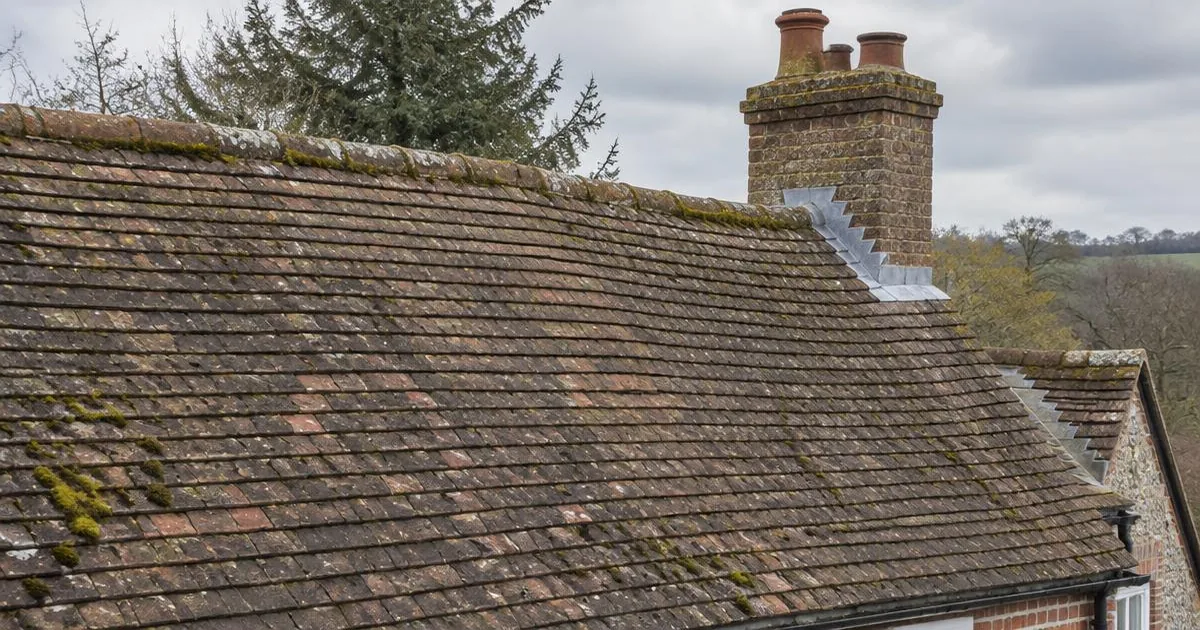
A well-installed tiled roof can protect a home for many decades, but there isn't one fixed age at which every roof needs replacing.
How long a roof lasts depends on the type of tile, the quality of the original installation, exposure to weather, maintenance and the condition of the other components that make up the roofing system.
That means an older roof can sometimes remain perfectly serviceable, while a younger roof may need attention because of damage, poor installation or particularly exposed conditions.
If you're wondering whether your tiled roof is getting towards the end of its useful life, here are the things that matter most.
Is there an average lifespan for a tiled roof?
There are useful general expectations for different roofing materials, but they should never be treated as an expiry date.
A roof is a complete system.
It includes much more than the visible tiles:
- tiles or slates
- battens
- roofing membrane or underlay
- ridge details
- verges
- valleys
- flashing
- fixings
- guttering
- roofline components
Some parts can deteriorate before others.
The visible roof covering may still have many useful years remaining even though flashing or an individual section needs repairing.
Equally, replacing a few tiles will not solve wider deterioration if several parts of an ageing roof are beginning to fail.
What affects how long a tiled roof lasts?
The roofing material
Different roof coverings age differently.
Concrete, clay and slate all have their own characteristics.
Some natural roofing materials can remain serviceable for a very long time when correctly installed, while other systems may have a shorter expected working life.
The important point is that material alone does not determine condition.
A good-quality tile fitted badly can develop problems earlier than expected.
The quality of the original installation
Good roofing starts with good workmanship.
The longevity of a roof can be affected by:
- tile fixing
- batten spacing
- membrane installation
- detailing around ridges and verges
- valleys
- flashing
- ventilation
- roof penetrations
A correctly installed roof should manage wind and rain as a complete system.
Small weaknesses in the original work may not become obvious until years later.
Exposure to North East weather
Two otherwise identical roofs can age differently depending on where the properties are located.
A roof in an exposed position may experience more:
- wind
- driving rain
- frost
- salt-laden coastal air
- temperature variation
Properties in exposed and coastal parts of Northumberland can therefore experience different conditions from homes in more sheltered locations.
That doesn't mean an exposed roof will necessarily fail early.
It simply means weather exposure is one factor when assessing its condition.
Roof orientation
Different sides of the same roof can age differently.
One slope may receive:
- more sunlight
- more wind
- more rain
- less opportunity to dry
- greater moss growth
It is quite possible for one section of a roof to require attention while another remains in good condition.
Trees and surrounding environment
Nearby trees can affect a roof by:
- dropping leaves into gutters and valleys
- encouraging moss growth
- reducing sunlight
- retaining moisture
- dropping branches during storms
Regularly clearing drainage areas can help prevent relatively simple maintenance issues developing into larger problems.
What are the signs that a tiled roof is ageing?
Age itself is less useful than looking for patterns of deterioration.
Potential signs include:
- repeated slipped tiles
- cracked or broken tiles
- increasing numbers of repairs
- damaged ridge details
- failing mortar
- deteriorating flashing
- recurring leaks
- sagging or visible movement
- problems appearing in several different areas
- widespread deterioration rather than one local defect
One damaged tile does not mean an old roof needs replacing.
The question is whether problems are isolated or becoming systemic.
Do cracked or slipped tiles mean the whole roof needs replacing?
Usually not.
Individual damaged tiles can often be replaced.
Storm damage, impact or an ageing fixing can cause one tile to move while the rest of the roof remains perfectly sound.
Replacement becomes more worth discussing when:
- large numbers of tiles are deteriorating
- tiles repeatedly slip in different areas
- repairs are becoming frequent
- other roofing components are also failing
- water ingress is occurring in several places
That is when looking at the roof as a complete system becomes more useful than continuing to repair individual symptoms.
Does moss mean my roof needs replacing?
No.
Moss on a roof does not automatically indicate that the roof has failed.
Growth can be influenced by:
- shade
- moisture
- roof orientation
- nearby trees
- local environmental conditions
However, heavy growth can make inspection more difficult and may contribute to blocked gutters and drainage areas.
If moss is accompanied by broken tiles, recurring leaks or other signs of deterioration, the underlying roof condition should be assessed separately.
What about the roofing membrane underneath the tiles?
The membrane or underlay sits beneath the main roof covering and provides an additional layer of weather protection.
It is normally hidden, which makes its condition harder for a homeowner to assess.
Problems may become apparent if:
- water reaches the loft
- membrane is visibly torn
- sections have deteriorated
- previous roof work has disturbed it
The condition of the membrane is one of the reasons a roof should not be judged only by how the tiles look from outside.
How often should I have my roof checked?
There is no requirement for a homeowner to commission constant roof inspections.
However, it is sensible to pay attention to the roof:
- after unusually severe weather
- if you find fallen tiles
- when a leak appears
- if gutters repeatedly fill with roofing debris
- before buying or selling a property
- when the roof begins needing repeated repairs
A simple visual check from ground level can sometimes identify obvious changes.
Can regular maintenance extend the life of a roof?
Good maintenance can certainly help prevent minor problems becoming larger ones.
Useful measures include:
- keeping gutters clear
- dealing with slipped tiles
- repairing flashing defects
- checking storm damage
- addressing chimney problems
- keeping valleys clear
- dealing with leaks promptly
Maintenance cannot make roofing materials last forever.
What it can do is prevent an otherwise serviceable roof deteriorating unnecessarily because a relatively minor defect has been left unresolved.
Should I replace my roof because of its age?
Not simply because of a number.
The better questions are:
- Is the roof still weather-tight?
- Are problems isolated or widespread?
- How frequently does it need repairing?
- What condition are the major roofing components in?
- Would further repairs offer reasonable long-term value?
If an older roof remains sound, replacing it purely because of age may be unnecessary.
If an ageing roof is developing recurring problems, replacement may begin to make more financial sense.
Read our guide: Does My Roof Need Repairing or Replacing?
What happens when a tiled roof is replaced?
A full roof replacement normally involves much more than simply putting new tiles over the old ones.
Depending on the property and specification, work may involve:
- removing the existing covering
- inspecting the underlying roof structure
- replacing membrane where required
- installing battens
- fitting the new roof covering
- completing ridge and verge details
- flashing
- valleys
- associated roofline work
The exact specification depends on the roof.
This is why quotations for apparently similar roof replacements can vary considerably.
How can I tell how old my roof is?
Sometimes homeowners know when the roof was installed from:
- previous invoices
- property records
- information from a former owner
- planning or building documentation
- photographs of earlier work
But often they don't.
That's not necessarily a problem.
A roofer does not need the exact installation date to assess the current condition.
What the roof is doing now is generally more important.
Tiled roof repairs and replacement in Northumberland
Hewitson Roofing is based in Blyth, Northumberland and works on tiled and other pitched roofs throughout Northumberland and surrounding parts of the North East.
Our work includes:
- tile repairs
- slate repairs
- leaking roofs
- flashing
- valleys
- ridge and verge work
- chimney-related roofing
- roof replacement
- complete new roofs
If you're unsure whether an older roof still has years of life remaining or whether replacement should be considered, we can assess its condition and explain the options. You can also check the areas we cover or contact Hewitson directly.