
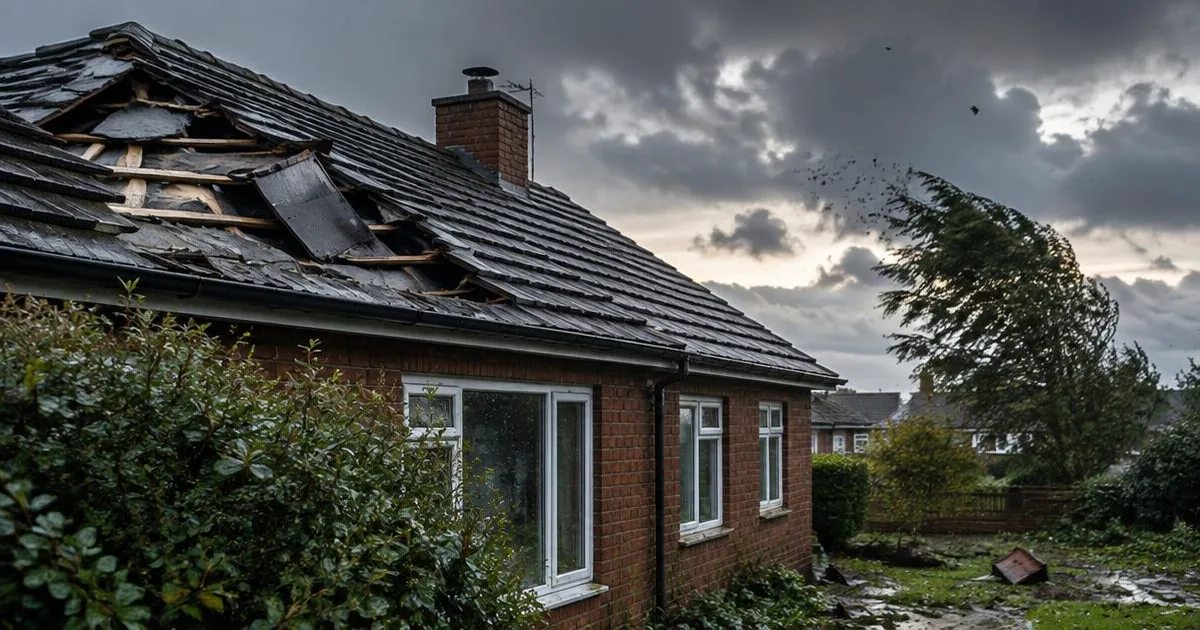
After strong winds or a storm, you don't always need to climb onto the roof to spot signs of damage. Many roofing problems can be identified safely from ground level by checking for slipped tiles, debris, damaged guttering, visible movement and signs of water getting into the property.
The most important thing is to look for changes — anything that appears different from how the roof looked before the bad weather.
If you've recently had high winds, heavy rain or severe weather, here's what to check and when it is worth asking a roofer to take a closer look.
What kind of roof damage can storms cause?
Storm damage varies enormously.
A roof may suffer:
- slipped tiles
- missing tiles
- cracked tiles
- displaced slates
- ridge damage
- damaged flashing
- lifted flat-roof coverings
- blocked gutters
- damaged fascias or soffits
- chimney damage
- leaks
- debris impact
- damage from nearby trees
Sometimes the damage is immediately obvious.
In other cases, the first sign is simply a damp patch appearing inside the house during the next period of rain.
That is why it is worth carrying out a simple visual check after particularly strong weather.
1. Look for missing or slipped roof tiles
High winds can move individual tiles or slates, especially if the fixings or surrounding materials were already beginning to deteriorate.
From ground level, look for:
- gaps in the roof covering
- tiles sitting out of line
- sections that look uneven
- visible underlay
- tiles or fragments on the ground
- loose material in gutters
One missing tile does not necessarily mean the whole roof has been badly damaged, but even a relatively small opening can allow rain to get beneath the roof covering.
2. Check the ridge and roof edges
The ridge runs along the highest point of many pitched roofs and can be particularly exposed to high winds.
Look for:
- displaced ridge tiles
- visible gaps
- broken mortar
- sections that appear to have moved
- debris below the roofline
Also check the edges of the roof, including verges.
High winds often affect exposed roof edges first.
If something looks noticeably different after the storm, it is worth having it assessed.
3. Check your gutters and downpipes
Storms don't only affect the main roof covering.
Heavy rain and high winds can fill gutters with:
- leaves
- moss
- branches
- broken tile fragments
- other debris
Blocked gutters may overflow and allow water to run down walls or back toward the roof edge.
Also look for:
- gutters pulling away
- broken joints
- sagging sections
- detached downpipes
- overflowing water
If you noticed water pouring over a gutter during the storm, it may simply be blocked — but it can also indicate that part of the roofline needs attention.
4. Look at chimneys and flashing
Chimneys are particularly exposed during high winds.
Check from ground level for obvious signs of:
- displaced chimney pots
- loose masonry
- missing mortar
- visibly damaged flashing
- movement around the chimney stack
Flashing around chimneys is designed to stop water entering where the chimney meets the roof.
If flashing has lifted or moved, rain may begin entering the roof even if the tiles themselves look fine.
5. Check for debris from trees
Branches can damage roofs during storms.
Even where a branch has not fallen directly onto the property, smaller debris can:
- crack tiles
- damage gutters
- block valleys
- affect rooflights
- damage flat-roof coverings
6. Check flat roofs carefully
Flat roofs can be vulnerable to storm damage, particularly at edges, joints and areas exposed to strong winds.
Possible signs of damage include:
- lifted edges
- torn or split coverings
- loose material
- movement around outlets
- standing water
- visible punctures
- damaged trims
7. Look inside the loft
If it is safe and accessible, your loft can provide useful clues after heavy rain or strong winds.
Look for:
- damp timber
- wet insulation
- dripping water
- dark staining
- daylight through the roof covering
- new damp patches
Use a torch rather than relying on natural light.
You may also notice a problem inside the loft before visible damage appears on a ceiling below.
8. Check ceilings and walls
Storm-related roof damage may first become apparent inside the property.
Look for:
- new damp patches
- brown staining
- bubbling paint
- peeling wallpaper
- damp around a chimney breast
- water marks near an outside wall
Remember that the visible damp patch may not be directly underneath the point where water is entering.
Rainwater can travel along roof membranes, rafters and other structures before becoming visible.
9. Check rooflights and windows
Roof windows and rooflights contain flashing, seals and other details that must remain weather-tight.
After very strong winds, look for:
- water staining around the frame
- damp plaster
- visible movement
- damaged surrounding tiles
- broken or displaced flashing
The window itself is not always the cause.
Sometimes the problem is with the roofing detail surrounding it.
10. Check any previous repair areas
If your roof has been repaired previously, it is worth checking those areas after severe weather.
This doesn't mean a previous repair was poor.
Any roof component can be affected by exceptional weather, and older sections of a roof may respond differently from newer ones.
Look for any obvious signs that something has moved or changed.
What should I do if I find storm damage?
If you can see obvious damage, resist the temptation to climb onto the roof and make a temporary repair yourself.
Instead:
Take photographs
Photograph the damage from a safe position.
Try to capture:
- the affected roof area
- fallen tiles or debris
- internal water damage
- damaged guttering
- any fallen branches
These images can help a roofer understand the problem and may also be useful if you need to contact your insurer.
Move belongings away from water
If rain is getting into the property, move furniture, electrical items and valuables away from the affected area where safe to do so.
Contain water
Use a suitable container to catch dripping water where practical.
Contact a roofer
Arrange for the damaged area to be inspected.
Even if the visible damage appears minor, it is worth checking whether surrounding roofing materials have also moved.
What if there is no visible damage?
A roof can occasionally be damaged without an obvious tile lying in the garden.
High winds may affect:
- flashing
- fixings
- ridge details
- valleys
- roof edges
- flat-roof seams
If you have noticed:
- a new leak
- unusual noises from the roof
- damp after the storm
- movement around a roofline
- gutter problems
it is worth having the roof checked even if there is no dramatic visible damage.
Does storm damage always mean I need a new roof?
No.
Many storm-related roofing problems can be repaired.
For example:
- replacing slipped tiles
- replacing damaged slates
- repairing flashing
- fixing guttering
- repairing ridge or verge details
may be sufficient if the rest of the roof remains in good condition.
A full replacement is more likely to be considered where the storm has caused widespread damage or exposed more general deterioration across an older roof.
You can read more in our guide: Does My Roof Need Repairing or Replacing?
What if the storm has caused a roof leak?
A leak after high winds does not always mean there is major roof damage.
The storm may have:
- moved a tile
- lifted flashing
- damaged a valley
- disturbed a roof junction
- blocked drainage
- exposed an existing weak point
The priority is identifying where the water is entering.
For more detail, read: Why Is My Roof Leaking? Common Causes and What to Do Next
Should I contact my insurance company?
If the damage appears significant, it may be worth checking your home insurance policy.
Policies vary, so you should confirm directly with your insurer what is covered and what evidence they require.
Photographs taken soon after the damage occurs can be useful.
Avoid making assumptions about whether a repair will or will not be covered until you have checked your own policy.
Is storm damage an emergency?
It can be.
Seek urgent help if:
- water is entering heavily
- a ceiling is bulging
- roof materials are loose and could fall
- a large branch has hit the roof
- chimney materials appear unstable
- damage is close to electrical fittings
- a significant section of the roof covering has been removed
Storm-damage roof repairs in Blyth and Northumberland
Hewitson Roofing is based in Blyth, Northumberland and carries out roof repairs throughout Northumberland and surrounding parts of the North East.
After severe weather, we can help assess problems involving:
- slipped tiles
- missing tiles
- slate damage
- roof leaks
- flashing
- valleys
- chimneys
- guttering
- roofline
- flat roofs
- other storm-related roofing damage
Northumberland and the wider North East can experience exposed weather conditions, particularly in coastal and open areas.
If something about your roof looks different after a storm, it is worth having it checked. You can also check the areas we cover or contact Hewitson directly.